
Quick Executive Summary
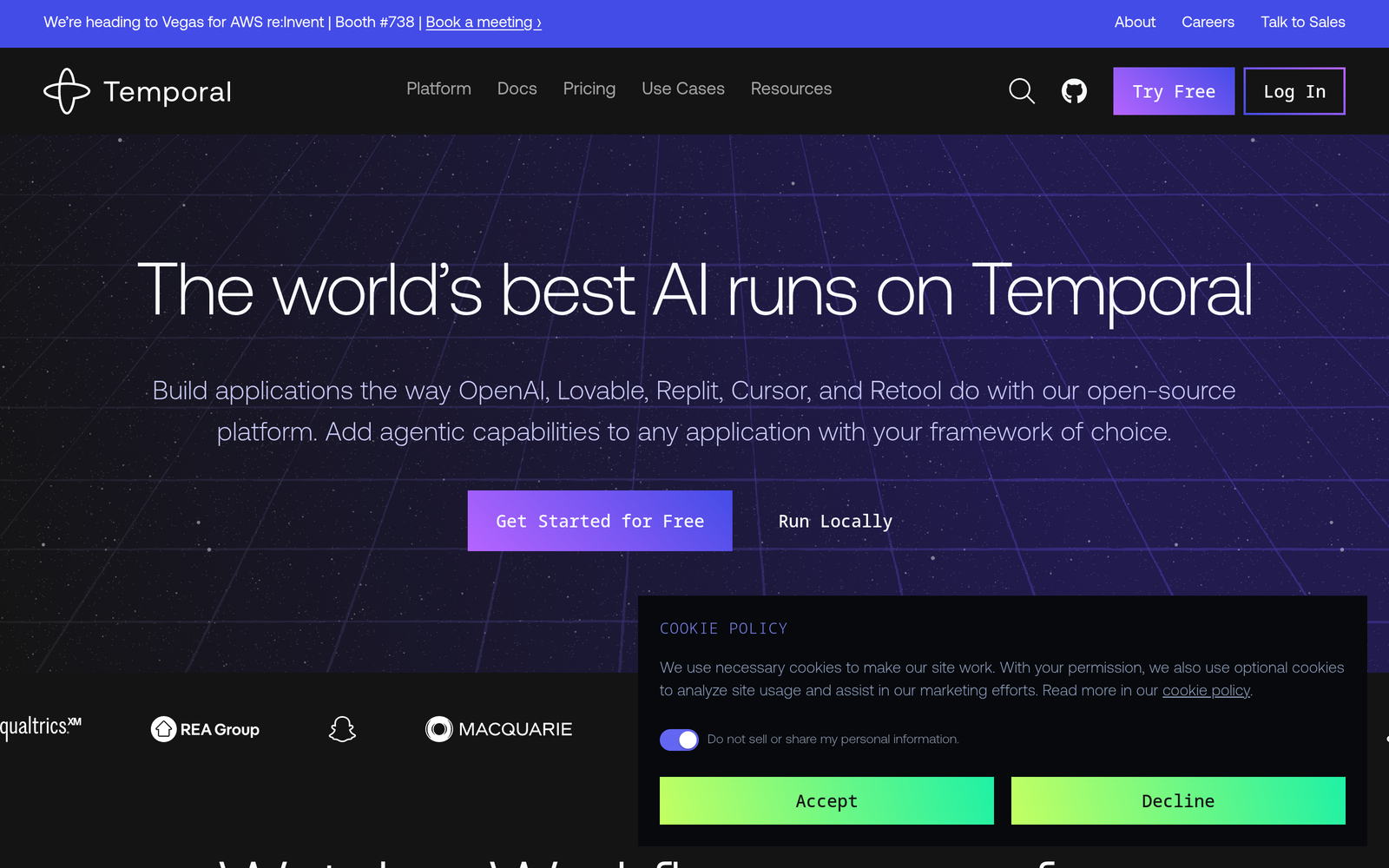
Distributed applications frequently fail not because of flawed business logic, but due to the brittle mechanics of handling partial failures, network timeouts, and asynchronous coordination across microservices. Temporal durable execution replaces the patchwork of message queues, database state checks, and custom retry loops with an abstraction: code that runs reliably to completion, regardless of infrastructure crashes, server reboots, or prolonged network partitions.
Available both as an open-source (MIT-licensed) self-hosted engine and as a managed SaaS (Temporal Cloud), Temporal allows developers to express complex, long-running orchestrations directly in standard programming languages including Go, Java, Python, TypeScript, and .NET. While it eliminates massive amounts of boilerplate state-machine code, it also introduces architectural constraints, primarily the strict requirement for deterministic workflow code and the operational overhead of managing event histories.
What Temporal Is and How It Actually Works
Temporal is an orchestration platform built around the concept of durable execution. In a standard microservices setup, if a process crashes mid-transaction, you must rely on external state machines, database flags, or manual compensation logic to resume execution. Temporal eliminates this by tracking the execution progress of an application as an append-only event history.
The platform separates execution into three primary components:
- Temporal Server: The central persistence and coordination engine that maintains the execution state, manages task queues, and records event histories. It does not execute your code directly.
- Worker Processes: Your application services running on your own infrastructure (or cloud instances) that host the actual business logic. Workers poll the Temporal Server for tasks via Task Queues, execute the code, and report results back.
- Temporal SDKs: Client libraries that implement the durable programming model inside your language of choice.
Temporal divides application logic into Workflows and Activities:
- Workflows: Orchestration logic that must be completely deterministic. Workflow code schedules activities, handles timers, and listens for external events. If a worker hosting a workflow crashes, another worker retrieves the event history from the Temporal Server and replays the workflow code up to the exact point of interruption, restoring memory state automatically.
- Activities: The non-deterministic units of work where external interactions occur—such as issuing HTTP calls, querying third-party APIs, processing payments, or generating LLM completions. Activities handle real-world side effects and can be automatically retried based on fine-grained exponential backoff policies.
Target Audience & Ideal Users
Temporal is designed for teams managing non-trivial distributed operations where execution reliability is critical. Ideal users include:
- Backend and Distributed Systems Engineers: Teams building multi-step transactions, payment processing pipelines, or asynchronous fulfillment systems that require ACID-like consistency across independent services.
- Platform and Infrastructure Teams: Organizations standardizing workflow orchestration to avoid having individual engineering squads reinvent custom database poller solutions.
- AI and ML Engineers: Developers deploying complex AI agent workflows, Model Context Protocol (MCP) integrations, human-in-the-loop validation steps, and LLM orchestration pipelines where single operations may stall or take minutes to hours.
Core Features & Capabilities
Temporal’s feature set focuses on workflow reliability, observability, and cross-boundary coordination:
- Durable Execution & State Preservation: Workflows preserve their state through node restarts, deployment rollouts, and infrastructure outages without requiring developers to write explicit database checkpoints.
- Automated Failure Handling & Sagas: Features built-in configurable retries, exponential backoffs, non-retryable error specifications, and native support for the Saga pattern to run automated compensating actions upon permanent failure.
- Live Interaction (Signals, Queries, Updates): Developers can inspect a running workflow’s internal state in real-time (Queries), push asynchronous external input into a running execution (Signals), or execute synchronous mutating requests with immediate return values (Updates).
- Durable Timers and Cron: Sleep operations can pause execution for seconds, weeks, or months without consuming compute resources, with full support for cron-style recurring schedules and historical backfills.
- Cross-Team Workflow Composition: Supports child workflows and Temporal Nexus, allowing teams to expose durable execution interfaces across different namespaces, clusters, and organizational boundaries.
- Worker Versioning & Replay Testing: Allows developers to test new code revisions against production event histories before deployment, ensuring that updates do not break determinism rules for running workflows.
- Broad Native SDK Ecosystem: Provides idiomatic SDKs for Go, Java, Python, TypeScript, .NET, PHP, Ruby, and Rust.
Pricing, Tier Differences, and Plan Limitations
Temporal operates under a dual distribution model: a self-hosted open-source core and a managed cloud platform.
| Tier | Base Pricing | Included Allocations & Overages | SLAs & Target Usage |
|---|---|---|---|
| Open Source (Self-Hosted) | Free (MIT License) | Unrestricted; users provision and pay for their own compute, storage, and persistence databases. | Community-supported. Best for teams with existing distributed database operations expertise. |
| Temporal Cloud (Pay-As-You-Go) | Usage-based; $150 credit valid for 90 days | Actions start at $50/million (discounts scale down to $25/million based on volume). Active storage at $0.042/GB-hour; retained storage at $0.00105/GB-hour. | Standard 99.9% uptime SLA (up to 99.99% with High Availability). Developer support billed at 10% of monthly usage. |
| Business Support Add-On | Starts at $500/month (or 10% of usage, whichever is higher) | Includes 2.5M Actions, 2.5 GB Active Storage, and 100 GB Retained Storage. | 2-hour response SLA for P0 issues during business hours. |
| Enterprise / Mission Critical | Custom pricing via Sales | Includes 10M Actions, 10 GB Active Storage, 400 GB Retained Storage, and SCIM single sign-on. | 24/7 coverage with 30-minute P0 SLA (15-minute with Mission Critical add-on); dedicated platform architect. |
Cost Considerations: Temporal Cloud charges primarily by the “Action” (a state transition, such as starting a workflow, completing an activity, or setting a timer) and storage consumption. Applications that feature tight polling loops or excessive signaling can generate high action volumes, requiring developers to design workflows efficiently to control cloud costs.
Key Advantages
- Orchestration as Real Code: Unlike declarative orchestration engines that rely on complex, rigid JSON or YAML DSLs (such as AWS Step Functions), Temporal workflows are written in standard, fully testable programming languages with native loops, conditionals, and type checking.
- Complete Elimination of Polling Boilerplate: Developers no longer need to write cron jobs to check database flags or implement custom exponential backoff logic for downstream dependencies.
- Unmatched Visibility: The event history provides a deterministic, auditable timeline of every input, output, failure, and retry, significantly reducing debugging time in distributed architectures.
- Decoupled Compute Architecture: Because workers execute on your infrastructure, your code and sensitive data stay within your security perimeter, even when using managed Temporal Cloud for state tracking.
Documented Drawbacks and Limitations
- The Determinism Constraint: Workflow code must be deterministic. Developers cannot call system clocks (e.g.,
Date.now()), generate non-deterministic random numbers, or make network calls directly inside workflow logic—these must strictly occur inside Activities. Violating this rule leads to non-deterministic execution errors during replay, which can stall production workflows. - Operational Burden of Self-Hosting: Running the open-source Temporal Server at scale requires maintaining supporting infrastructure, typically including Elasticsearch/OpenSearch for visibility and Cassandra or PostgreSQL for persistence. Managing these stateful systems requires meaningful DevOps overhead.
- Pricing Mental Model: Translating traditional microservice API interactions into Temporal “Actions” requires architectural adjustments. Poorly structured workflows that trigger excessive signals or micro-activities can accumulate costs unexpectedly on Temporal Cloud.
- Overkill for Simple Pipelines: For synchronous CRUD APIs or basic linear tasks that execute in milliseconds without failure handling requirements, adding Temporal introduces unnecessary infrastructure and architectural weight.
Who Should Consider Temporal vs. Who Should Look Elsewhere
Choose Temporal If:
- You are building multi-step distributed operations (e-commerce checkout, provisioning systems, financial ledgers) where failures cannot leave the system in an inconsistent state.
- You run complex, long-duration AI agent loops, human approval workflows, or training pipelines requiring persistent state across days or weeks.
- Your team prefers defining business logic using native language code, complete with unit testing, version control, and IDE debugging, instead of visual flowcharts or YAML pipelines.
Look Elsewhere If:
- You require ultra-low-latency, sub-millisecond execution loops; Temporal’s persistence and polling model adds round-trip latency to task scheduling.
- You are executing simple, one-off synchronous tasks where an immediate HTTP response is required and failure state does not need tracking.
- Your engineering organization does not want to adapt to the mental model of deterministic replay constraints and activity separation.
Transparent Editorial Evaluation & Methodology
This technical analysis is based on evaluation of Temporal’s open-source architecture, published technical documentation, official API specifications, and publicly documented pricing structures. No independent performance benchmarks or simulated load testing were conducted for this report. Analysis of cost structures reflects vendor list pricing as of mid-2026. Organizations evaluating Temporal should validate their specific throughput requirements and run determinism tests within their target language SDK before committing to enterprise production deployments.
Review Methodology & Source Verification
This is a research-based product analysis based on vendor documentation, publicly documented pricing, and verified technical specifications. No hands-on trial was conducted.
Last Verified: October 18, 2026
Primary Sources: Temporal. Official Documentation
Similar AI Tools You Might Like
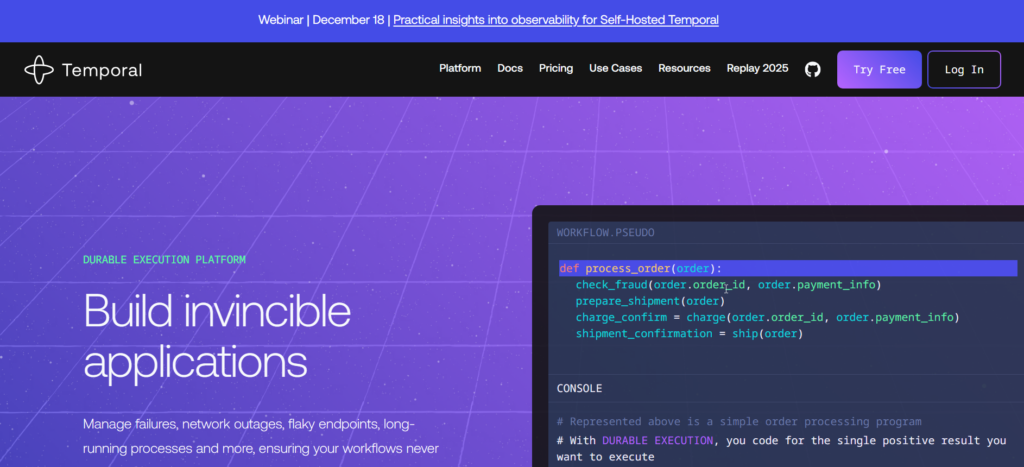
As the software development landscape evolves, teams are constantly searching for tools that enhance efficiency and...
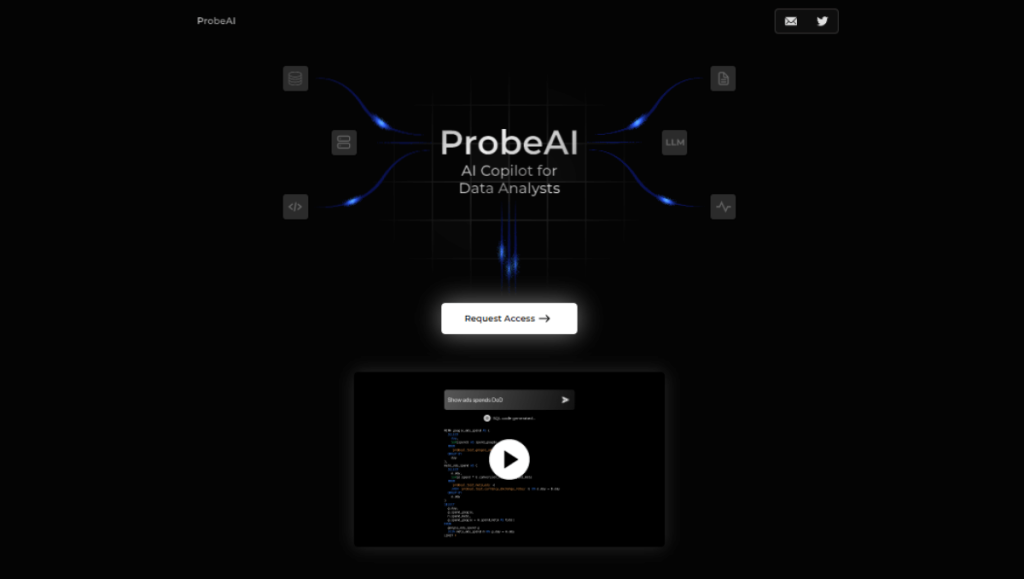
Probe AI is the ultimate AI tool for data analysts, serving as your trusted copilot. With...
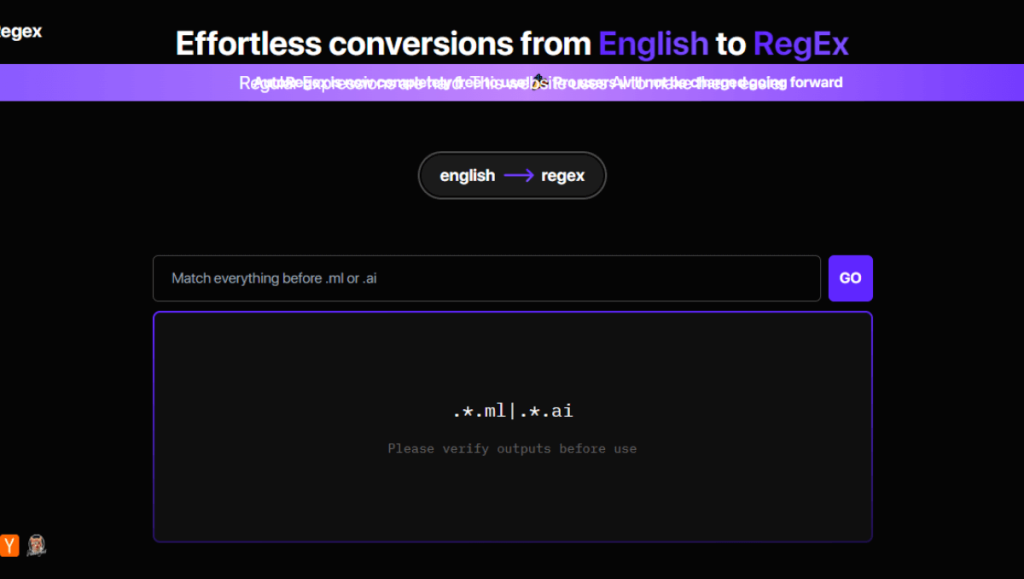
AutoRegex is an innovative tool that simplifies the process of creating regular expressions (RegEx) using natural...